Useful resources for libraries from #rwpchat
The read watch play online reading group may have finished, but there are lots of useful resources and ideas available via the blog. The monthly themes can give ideas for library displays, for example #wildread, #speedread, #redread, #bardread. #songread, #artread, #geekread, #historyread, #bookbitesread, #flightread, or #joyread can be used any time.

#secretread at Trangie Library, NSW
There are other resources as well. This visualisation of all the tweets has a searchable section.
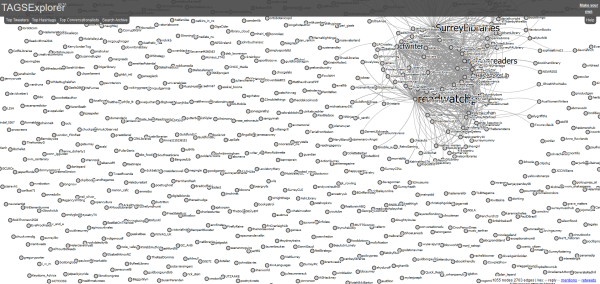
Screen shot of Tags explorer beta for #rwpchat
You can search this archive by clicking on search on the top right of the screen. The image below shows a search for crime, but there are many more searches you can try. More recent tweets are available here.

Showing a search for crime om Tags explorer beta
Have fun using these resources, and share the photographs on social media using #rwpchat.
Have a great year reading, watching and playing.
So long and thanks for all the fish (and the suggestions!). . .
It’s been a fantastic project and everyone on the Readers’ Advisory Services Working Group (members past and present) thank everyone who has joined us, made suggestions and shared their reading, watching and playing experiences.
We’re still working to promote Readers’ Advisory Services across New South Wales and will continue to host the Annual Readers’ Advisory Seminar. Our next Seminar is 20 March 2019.
Thanks to all the partners in particular the work of Surrey Libraries @SurreyLibraries and @ggnewed
This blog will stay here so you can continue to use these resources. We will also maintain our Twitter account to let you know of upcoming events, including our Annual Seminar.

join the #chillread discussion today for #rwpchat
There will be a Twitter discussion on 18 December starting at 11am and 8.00pm Australian Eastern Standard Time. 6.00pm Singapore Standard Time, 12.00 noon Central European Summer Time, 9am – 11am BST. Note this is a staggered discussion.
Use the tags #chilloutread and #rwpchat as you discuss your reading, watching and playing, so others can join in the conversation too.
Will you be shivering or chilling with Ice station by Matthew Reilly, Ice Station Zebra by Alistair MacLean or Chasing the light by Jesse Blackadder? You may also want to explore the history of the Antarctic with information about Roald Amundsen, Ernest Shackleton, Robert Scott and their expeditions.
Will you be reading books which make chills go up your spine, or watching or reading tales of crime that makes your blood run cold or is true crime more your style? Do you chill with Jo Nesbo, Henning Mankell, Yrsa Sigurðardóttir and Karin Alvtegen and their characters in cold climates? Or are you seeking to chill out and relax? This could be a time to try reading some comics, or is reading about romance more your #chilloutread?
Perhaps ice-cream and gelato recipes will your #chilloutread, or will you be making cocktails, reading about craft beer, or even making it.
Hobbies can help us chill, so you may want to explore knitting, crochet, or cycling (or you could be knitting and crocheting while watching the cricket). Will you be playing winter sports in the chill to keep warm, or summer sports to chill out?
Do games help you chill? Does World of Warcraft help (with the chilly home world of the Dwarves and Gnomes), or do you chill with crossword or jigsaw puzzles, or would you rather scrabble or other board games?
What music helps you chill out? Or do you want the speakers to freeze so you have silence?
We also should include Frozen, The snow queen, and the Lion, the witch and the wardrobe. If you want sadder reading try, The little match girl and the Happy prince, and of course, “Winter is coming”. The Hobbit and The Lord of the rings are also titles to watch or read or play.
Where’s your favourite place to chill out whilst you’re reading?
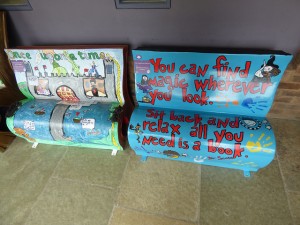
(c) Elliott Brown/Flickr (CC BY-SA 2.0)
What will be your favourite #chilloutread this month? Don’t forget …while you are reading, playing or watching, you might like to tweet about it using #chilloutread #rwpchat so that other people can have a conversation with you about it. You can add to the discussion on Pinterest too. You might like to post your photographs to Instagram or Flickr and use #chilloutread #rwpchat so others can share in your reading, watching and playing.
Join us tomorrow to share your #chilloutread favourites.
Make sure you include #chilloutread and #rwpchat

Stuff so good, we did it twice!
We revisited some themes over the years. Many of which were our most popular and engaging discussions. . .including: #firstread (2017 and 2018), #wildread (2016 and 2018), #wellread (2015 and 2018), #reelread (2014 and 2018), #secretread (2014 and 2018), #crimeread (2013 and 2018), #chillread / #chilloutread (2015 and 2018), #artread (2013 and 2016) and #historyread (2013 and 2016). . .what was your favourite theme? Is there are memorable suggestion that someone has made to you during a Twitter Reading Group Session? Do you remember making a suggestion to someone?
And as well as revisiting themes, there were some books that were so popular we revisited them for a number of themes. George R.R. Martin’s Game of Thrones was a particular fantasy favourite and came up in #redread, #questread, #darkread and #fanread discussions. And in a much less bloody style of writing Jane Austen’s Pride and Prejudice appeared in #classicread, #reelread and #heartread. Less bloody? We shouldn’t forget the mentions of Pride and Prejudice and Zombies.
How every theme connected to Matthew Reilly
With the themes for each month, the aim was that someone could fit favourite titles in most categories. We wanted people to be able to either tweet about new reading they had done, or join the discussion with some old favourites. We also wanted people to be able to discuss any kind of reading. Have a look at the what is reading post to see the range of reading which could be included as well as watching and playing. Below is a list of the 2018 themes with a brief explanation about how titles by Matthew Reilly (for example) can fit each of these themes.
This photograph is for those who have read Ice Station
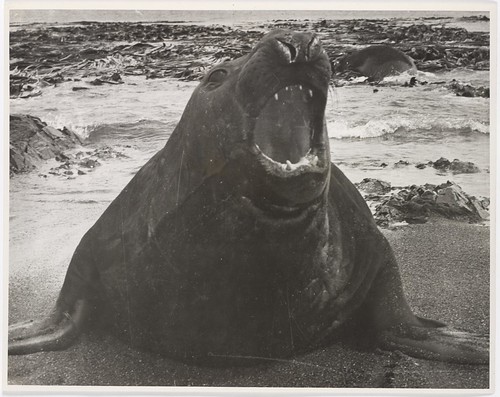
January – #firstread What was the first Matthew Reilly title you read?
February – #wildread Matthew Reilly titles have wild elements, including wild driving, and some amazing wild animals
March – #redread Matthew Reilly titles have a lot of blood (yes even Jason Chaser hover car racer has some injuries) and people ‘seeing red’
April – #wellread Matthew Reilly titles may provide a sense of wellness upon completion as well as gratitude that life is not always so eventful
May – #localread these titles may be a local read as there are detailed descriptions of many different places around the world including central Australia, Paris and part of Egypt.
June – #technoread technology is often crucial including robots, sunglasses, prosthetic arms, watches (there is often a countdown) and aircraft.
July – #classicread Matthew Reilly titles are modern classics
September–#reelread Matthew Reilly titles are yet to be filmed although there is a test film for Contest
October– #secretread Some people may read their Matthew Riley titles in secret (no need to do this), and there are secrets within the novels which can lead to much of the action (need I mention dragons)
November- #crimeread Matthew Riley novels often have crimes as key elements, some of these are government to government crimes, or crimes within governments, crimes within tournaments, as well as lots of conspiracies
December – #chilloutread some of these novels have snow and so have chilly locations (including Ice Station, Scarecrow and the Army of Thieves) however, the sheer amount of action in these can make them titles to chill out while you read them.
#darkread
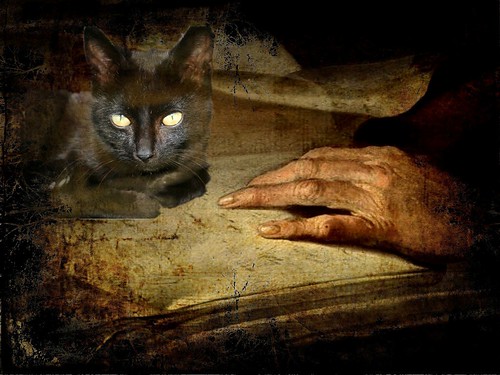
In October 2015 we turned the lights off and read in the dark, just in time for Halloween. We discovered the gothic (and returned to that in 2018 with Gothic Novel Jam), fantasy, horror, Batman (the Dark Knight), the night sky, anxiety, depression, characters in black, dark spaces and creatures underground…. and there was Game of Thrones, again.
The Twitter discussion itself also featured chocolate, fruitcake, brownies and a black burger. But it wasn’t just books that featured, there was also classical music for Halloween, and a cross over into heavy metal cookbooks. Lots of people enjoyed sharing their dark fix during that discussion.
Celebrations and commemorations!
Over the years we’ve commemorated some really big anniversaries including the Centenary of the First World War with #warread, including specifically ANZAC Day, four hundred years since the death of William Shakespeare with #bardread (2016), and eight hundred years since the signing of the Magna Carta with #legalread (2015). Though not a landmark year, we also marked Human Rights Day in 2014.
For these “real world” events many books, films, and television shows featured in the discussions, mostly focused on non-fiction and biographical representations of these events along with opportunities to discover fictional interpretations of them as well. And the backdrop of events such as these and other key important events and issues has given many writers the opportunity to educate as well as share their fictional tales. And on a lighter note, Star Wars Day (May the 4th); the 200th anniversary of the publication of Frankenstein and birth of Emily Bronte; and the 20th anniversary of the publication of Harry Potter (yes, it has been that long already!) have also been featured and celebrated here.
We are revisiting some other popular posts including. . .#furread
One month we read, watched and played with animals. We used the tag #furread, but also saw birds, reptiles, insects, fish and lots of other types of living creatures. There are so many amazing reads featuring animals and we had a great time talking and Tweeting about them.
Children’s books are a great starting point, but the options are almost endless with many films featuring animals whether real, imagined or fictional. There are animal heroes and comedians, military animals, and other working animals, as well as the people who work with then, or heal them.
We can’t ignore paranormal reading either, with werewolves and other shapeshifters, and don’t forget the selkies.
Animals also feature in microscience titles such as Cod, exploring these subjects in much loving detail.
Rats feature in many works such as Rats of Nimh, Ratatouille, and with the character Death of Rats in many Terry Pratchett novels, and other animals are the focus of different mythologies.
Animals are participants in sports, but there are also issues of animal welfare.
There are imagined, hybridised (Island of Dr Moreau), and recreated animals (Jurassic Park) Synthetic Animals/Extinct Animals(Do Androids Dream of Electric Sheep).
There is much to read about endangered animals as well.
Games also involve animals (Fleece lightning, World of Warcraft).
Plus, there is also also animal husbandry and recipes involving animals.
What are your favourites for #furread?
#crimeread
There have been lots of bodies in our libraries over the years: one in three new books published in English every year falls into the crime fiction category. True crime is also increasingly popular. So, from very neat murders through to ghastly and gory tales, crime writing takes up a large amount of shelf space in bookstores and in libraries. There are early and modern classics. Book by men and women. Crime stories focused on the detective, the forensic professional, the lawyer, the accidental sleuth and more.
Crime writing offers windows into the worlds of the worst types of criminals. These tales also let us travel – across time and around the world – we can work hard to solve the crime or we can sit back and let our heroes and heroines being offenders to account for what they have done. What are your favourite crime related reads? Any films or games? What are the blogs, Twitter streams or magazines you read for #crimeread? What about podcasts?

 Read Watch Play